Within Saint Lucia UFOs
Can Sunset Photos Create UFOs?
The Castries triangle case shows why later-discovered objects in sunset photos need special caution before being treated as UFO evidence.
On this page
- What the 2012 Castries report says
- Birds, insects, flare and sensor artefacts
- How photo sequences and metadata help
Page outline Jump by section
Introduction
The 2012 Castries report is one of the weakest but most instructive entries in Saint Lucia’s small UFO record. According to the public account, the witness did not report seeing an unusual object in the sky at the time. Instead, a triangular shape was allegedly discovered later while reviewing sunset photographs taken in Castries. That distinction matters. A photograph that appears anomalous after the event is a very different kind of evidence from a live observation supported by multiple witnesses, video, radar data or a sequence of images. The Castries case highlights a recurring problem in UFO research: cameras often record artefacts, reflections, insects, birds and sensor effects that the human observer never noticed. The result can be an image that looks extraordinary while providing very little proof of an extraordinary object. [Wikipedia]WikipediaLens flareLens flare
 Within the Saint Lucia context, Castries is an especially challenging environment for interpreting sunset imagery. Bright low-angle sunlight, reflections from the sea, coastal haze, urban lighting, aircraft activity around George F. L. Charles Airport and constantly changing atmospheric conditions all increase the chances of misleading photographic effects. The lesson of the 2012 report is not that every unusual image is automatically explained away, but that sunset photographs require a higher evidential threshold before they can be treated as UFO evidence.
What the 2012 Castries report actually says
The publicly available description of the case is extremely limited. The report categorised the object as a triangle and stated that it was found only after the witness examined sunset photographs. No detailed image analysis accompanied the report, no independent witness testimony was attached, and the public entry did not provide the original image sequence for examination.
That creates several evidential problems:
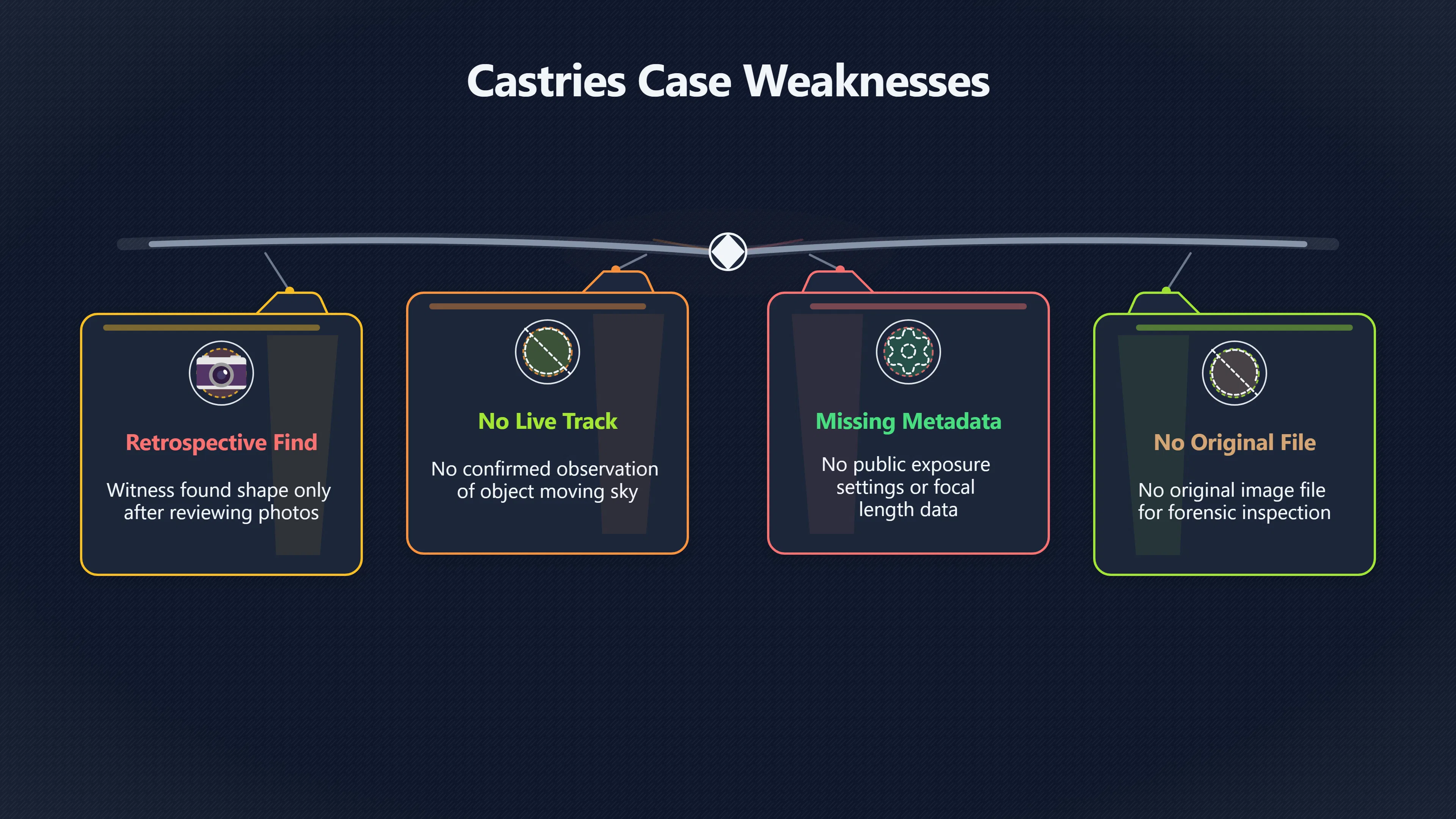
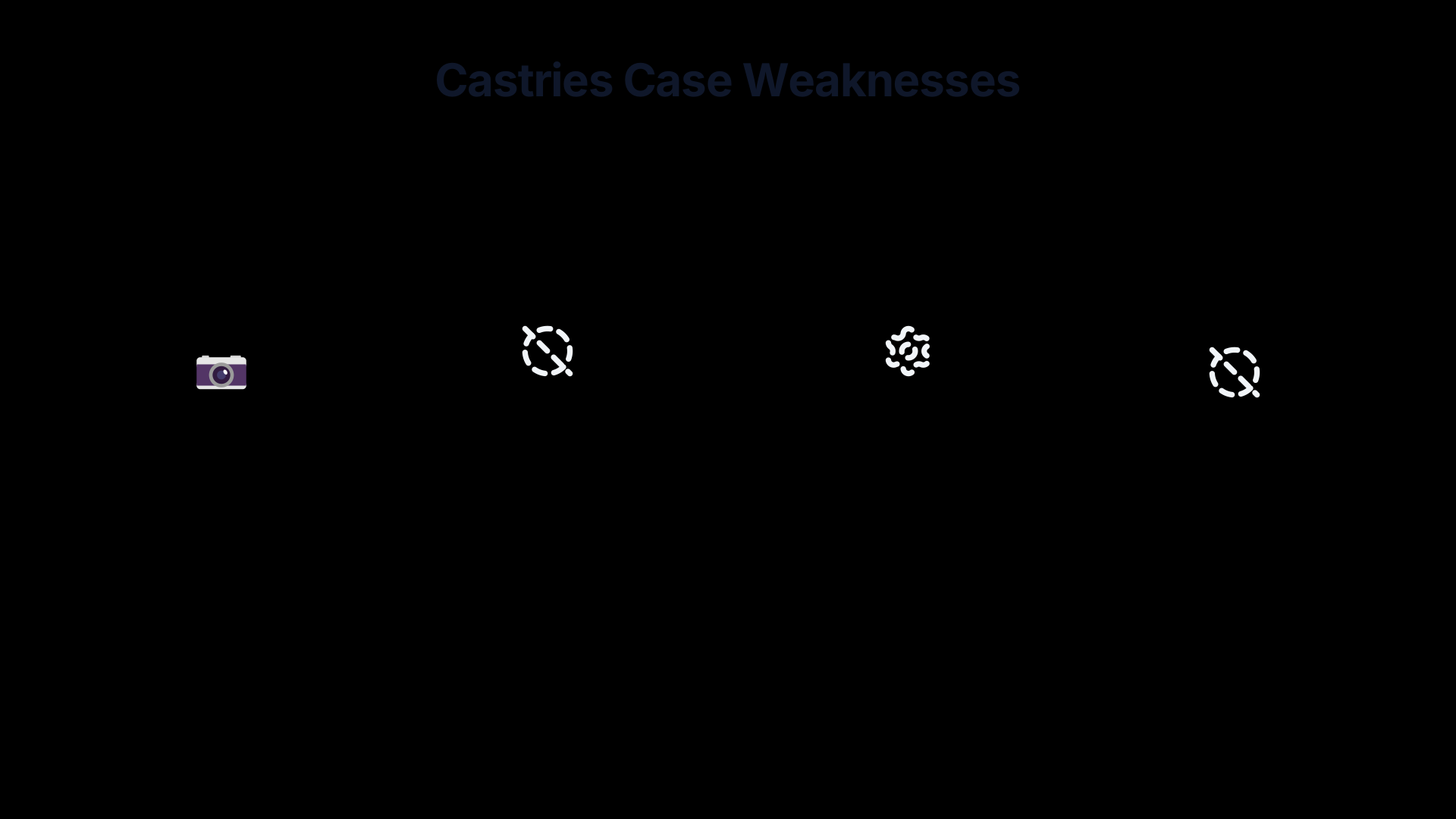
- There is no confirmed observation of an object moving through the sky.
- There is no duration estimate because the object was not noticed at the time.
- There is no way to compare multiple frames publicly to see whether the shape changed position.
- There is no public metadata showing exposure settings, focal length or camera type.
- There is no publicly available original image file for forensic inspection.
In UFO investigations, photographs discovered after the fact often occupy a lower evidential category than direct observations. The image may still capture something real, but without contextual information it becomes difficult to distinguish between an external object and a camera-generated effect.
The Castries report therefore functions less as a compelling sighting and more as an example of why photographic anomalies require careful technical examination before being classified as unidentified aerial phenomena.
Why sunset conditions are especially deceptive in Castries
Castries sits on Saint Lucia’s western coast, where sunsets frequently occur over bright sea horizons. The combination of tropical humidity, haze and direct solar glare creates conditions that challenge both professional and consumer cameras. Historical weather records for September 2012 show warm, humid conditions and periods of cloud cover consistent with the atmospheric scattering commonly seen in Caribbean sunset photography. [Time and Date]timeanddate.comTime and DateWeather in September 2012 in Castries, Saint LuciaWeather reports from September 2012 in Castries, Saint Lucia with highs an…
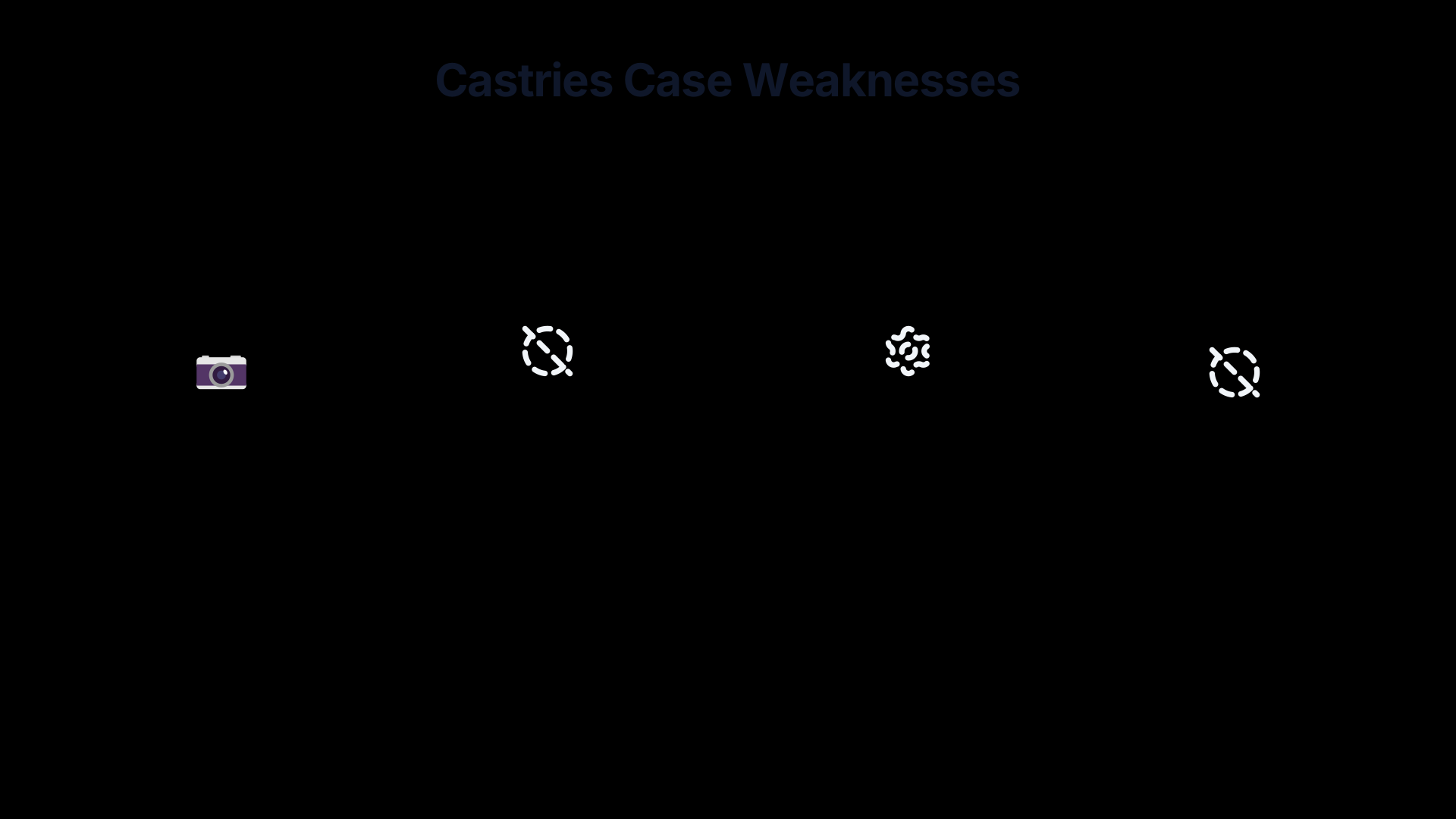
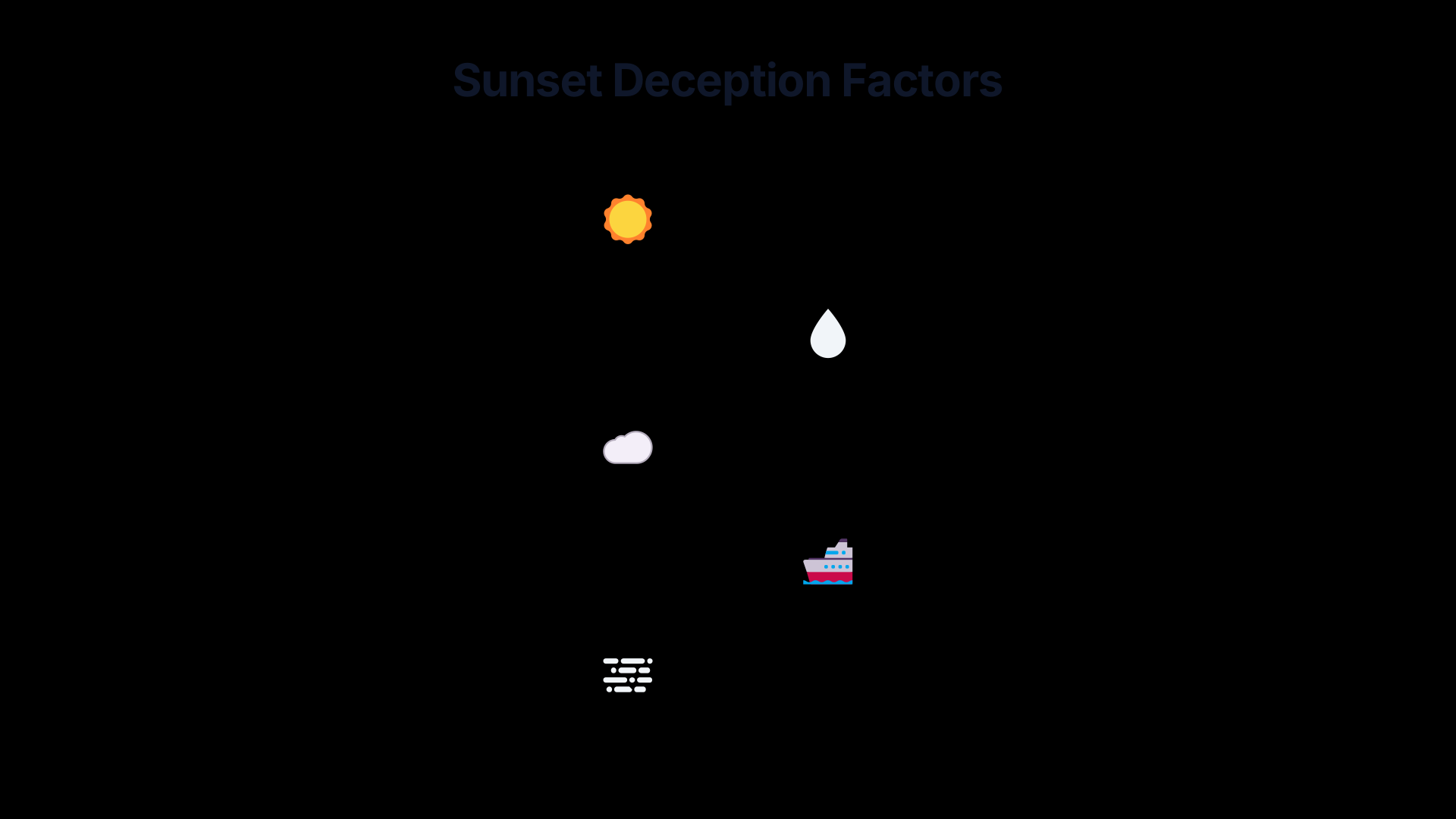
Several factors can produce unusual shapes near the setting sun:
Extreme brightness contrast. Cameras struggle when a brilliant light source occupies part of the frame. Exposure systems attempt to balance dark foregrounds with bright skies, often generating flare, ghost images and contrast loss. [Wikipedia]WikipediaLens flareLens flare
Sea reflections. Light reflecting from water can strike lenses at unexpected angles, creating geometric artefacts that appear detached from the sun itself. [Wikipedia]WikipediaLens flareLens flare
Atmospheric haze. Coastal moisture and airborne particles scatter light, sometimes producing apparent shapes or bright regions that look more structured in photographs than they did to the eye. [aty.sdsu.edu]aty.sdsu.eduArtifacts in sunset photographyAll the picture shows is some quirk of the imaging method used. These misleading appearances in pictures a…
Urban surroundings. Castries includes ships, harbour infrastructure, aircraft routes and dense human activity. Small distant objects can become ambiguous when silhouetted against a bright sky.
A photograph taken under these conditions may contain features that appear triangular, metallic or structured even when no unusual craft was present.
Birds, insects, flare and sensor artefacts
The most common explanation for a sunset UFO photograph is not a secret aircraft or unknown technology. It is usually a combination of lighting, motion and camera behaviour.
Birds and insects can become geometric shapes
A bird passing through the frame at the moment of exposure may appear as a dark triangular silhouette, particularly when wings are partially folded. Insects flying close to the lens can be even more misleading. Because they are near the camera and often out of focus, they may appear as oddly shaped objects that seem much larger and farther away than they really are.
A single still image often removes the contextual clues that would identify these objects immediately in motion. What appears to be a distant structured craft can sometimes be a nearby insect crossing the lens for a fraction of a second.
This possibility becomes especially important when a witness reports discovering an object only after reviewing photographs. If the object was not noticed during the event, it may have been visible only for a tiny fraction of a second.
Lens flare can create convincing UFO-like forms
Lens flare is one of the most important mechanisms in cases like the Castries report. It occurs when intense light enters a camera lens and reflects internally between optical elements. The resulting artefacts may appear as bright discs, triangles, streaks, polygons or glowing shapes floating in the sky. [Wikipedia]WikipediaLens flareLens flare
Several characteristics make flare particularly deceptive:
- It often appears geometrically shaped.
- It may look detached from the sun.
- It changes position as the camera angle changes.
- It can appear only in some photographs of a sequence.
- Different camera models produce different flare patterns.
Researchers working on flare-removal systems describe these artefacts as a persistent challenge because they can mimic meaningful visual structures while containing no information about actual objects in the scene. [arXiv]arxiv.orgarXiv Automatic Flare Spot Artifact Detection and Removal in PhotographsarXiv Automatic Flare Spot Artifact Detection and Removal in Photographs
Sunset photography is one of the situations most likely to generate these effects.
Sensor contamination and digital artefacts
Not every strange shape originates in the sky. Dust on a sensor, reflections from filters, diffraction effects and digital image processing can create marks that seem external to the camera but are actually internal artefacts. Photography specialists regularly document cases where unusual spots, patterns or bright structures near the sun were eventually traced to sensor contamination or optical effects. [Photography Stack Exchange]photo.stackexchange.comwhat is the cause for this diffused artifact around the sunSave it as an example. Remedy: Clean your sensor…
Digital cameras introduce additional complications. Sensor-level diffraction and internal reflections can generate coloured or geometric features that are invisible through the optical viewfinder yet appear in the final image. [Wikipedia]WikipediaLens flareLens flare
For investigators, this means that an apparently structured triangular shape in a sunset photograph is not automatically evidence of a triangular object in the sky.
How photo sequences reveal what a single image hides
One reason the Castries case remains difficult to evaluate is the apparent absence of a publicly available image sequence.
A single frame rarely provides enough information to distinguish between an external object and an optical artefact. Multiple photographs taken seconds apart are far more useful.
Investigators typically look for several indicators:
Does the object move independently of the camera?
A real aircraft, bird or balloon should maintain a coherent path across successive images.
Does the shape remain identical?
Lens flare often changes dramatically as the camera angle shifts slightly. Real objects generally preserve their basic structure.
Does the object appear in every frame?
A dust particle or sensor artefact may remain fixed relative to the image sensor rather than the scene.
Is there motion blur?
Birds and insects frequently show blur patterns that become obvious when adjacent frames are compared.
Without a sequence, these questions become difficult or impossible to answer.
Why metadata matters more than dramatic shapes
The most useful evidence in photo-based UFO cases is often not the image itself but the data attached to it.
Modern photographs usually contain EXIF metadata, which can record:
- Camera model
- Lens type
- Exposure time
- Aperture
- ISO setting
- Date and time [timeanddate.com]timeanddate.comTime and DateWeather in September 2012 in Castries, Saint LuciaWeather reports from September 2012 in Castries, Saint Lucia with highs an…
- Sometimes GPS location
This information allows analysts to reconstruct shooting conditions and evaluate possible explanations.
For example, a very slow shutter speed could increase the likelihood of motion blur from a bird. A wide-angle lens aimed close to the sun might increase the likelihood of flare. Knowledge of the exact time can be compared with aviation records, sunset position and weather conditions.
Because the public Castries account lacks this supporting information, the image remains difficult to evaluate. The unusual appearance of an object alone is not enough to establish that the object itself was unusual.
What the Castries case contributes to the Saint Lucia record
The value of the Castries report is not that it provides strong evidence of an unidentified craft. Its value is methodological.
Among the small number of publicly accessible Saint Lucia UFO reports, the Castries entry illustrates a recurring issue in modern sightings: cameras can generate apparent anomalies that look more dramatic after the event than they did during it. The report also demonstrates why investigators place greater weight on cases involving multiple witnesses, continuous observation, original image files, metadata and image sequences.
For Saint Lucia’s broader UFO record, the case serves as a cautionary example. A sunset photograph containing a triangular shape may be genuinely unexplained, but without supporting evidence it is often impossible to separate an unknown aerial object from the many artefacts created by bright tropical light, coastal conditions and modern digital cameras. In practical terms, the Castries report argues for sceptical analysis first and extraordinary conclusions only after simpler photographic explanations have been tested and ruled out.
Amazon book picks
Further Reading
Books and field guides related to Can Sunset Photos Create UFOs?. Use these as the next step if you want deeper reading beyond the article.
Understanding Exposure
Rating: 4.5/5 from 19 Google Books ratings
Explains how light, exposure and photographic artefacts can create misleading images.
Read This if You Want to Take Great Photographs
Helps readers understand common visual and camera effects.
The Believing Brain
Explains why people may interpret ambiguous photos as extraordinary.
Endnotes
-
Source: Wikipedia
Title: Lens flare
Link: https://en.wikipedia.org/wiki/Lens_flare -
Source: aty.sdsu.edu
Link: https://aty.sdsu.edu/observing/artifacts.htmlSource snippet
Artifacts in sunset photographyAll the picture shows is some quirk of the imaging method used. These misleading appearances in pictures a...
-
Source: arxiv.org
Title: arXiv Automatic Flare Spot Artifact Detection and Removal in Photographs
Link: https://arxiv.org/abs/2103.04384 -
Source: arxiv.org
Title: arXiv How to Train Neural Networks for Flare Removal
Link: https://arxiv.org/abs/2011.12485 -
Source: arxiv.org
Link: https://arxiv.org/abs/2308.16460 -
Source: timeanddate.com
Link: https://www.timeanddate.com/weather/saint-lucia/castries/historic?month=9&year=2012Source snippet
Time and DateWeather in September 2012 in Castries, Saint LuciaWeather reports from September 2012 in Castries, Saint Lucia with highs an...
Published: September 2012
-
Source: photo.stackexchange.com
Title: what is the cause for this diffused artifact around the sun
Link: https://photo.stackexchange.com/questions/42326/what-is-the-cause-for-this-diffused-artifact-around-the-sunSource snippet
Save it as an example. Remedy: Clean your sensor...
Additional References
-
Source: facebook.com
Link: https://www.facebook.com/groups/978517638956345/posts/3766273680180713/Source snippet
Caught the sun before it logged out. Sunset@Saint LuciaBeautiful Caribbean sunset in Castries, St Lucia. Keon Lessey ▻ Sunrise and sunset...
-
Source: facebook.com
Link: https://www.facebook.com/StLuciaByKirk/videos/st-lucia-sunset-secrets-you-didnt-know-that-you-didnt-know%EF%B8%8Fabout-10-15-minutes-a/1341404137336718/Source snippet
15 minutes after the sun drops below the horizon the sky will...
-
Source: reddit.com
Title: What is this artifact in my photo?
Link: https://www.reddit.com/r/AskPhotography/comments/1nscz9t/what_is_this_artifact_in_my_photo_never_seen_lens/Source snippet
Never seen lens flare like...This is lens flare. Modern multi-coated lenses tend to suffer from weird coloured refractive errors when pi...
-
Source: sentientorbs.com
Link: https://sentientorbs.com/explore/sightings/NUFORC-79732Source snippet
ion from the sun on the left side of craft.Read more...
-
Source: facebook.com
Link: https://www.facebook.com/groups/solaractivity/posts/4305502809461030/Source snippet
round the sun. Has anyone ever noticed this before...
-
Source: facebook.com
Link: https://www.facebook.com/groups/6442905965807194/posts/7591848964246216/Source snippet
4k camera. Live video and still. I see these...
-
Source: exposuretherapy.ca
Title: common image artifacts in photography and how to fix them
Link: https://exposuretherapy.ca/common-image-artifacts-in-photography-and-how-to-fix-them/Source snippet
This happens most often when you change lenses in a dusty environment. How to fix it: Many...
-
Source: youtube.com
Link: https://www.youtube.com/watch?v=JhEZ1upn190Source snippet
rophotos. These are issues we encountered in the past (along...
-
Source: youtube.com
Link: https://www.youtube.com/watch?v=UD0zFHq9i_8Source snippet
The Shag Harbour UFO Incident - Full Documentary...
-
Source: youtube.com
Title: Breaking Down 8 Viral Hoaxes | The Proof Is Out There
Link: https://www.youtube.com/watch?v=yzKHzxtGXtISource snippet
Unidentified Lunar Anomalies and UFO | NASA US Government Archives | Unexplained Objects on the Moon...
Topic Tree