Within AlbanianUFOs
How Did Albania's Cold War Secrecy Shape UFO Sightings?
Albania's Cold War UFO claims, including Mount Tomorr incidents, highlight secrecy and military response patterns.
On this page
- Mount Tomorr sightings
- Kuçova Air Base activity
- Sigurimi archive context
Page outline Jump by section
Introduction
Albania’s communist-era UFO stories sit at the intersection of Cold War isolation, military secrecy and fragmentary archives. Unlike the better-known UFO records of the United States or Soviet Union, Albania never developed a public investigative programme, a civilian reporting network or a transparent declassification process. Most surviving accounts come from later interviews, memoir-style reporting and scattered press investigations after the fall of communism. That makes the historical question less about proving extraordinary craft and more about understanding how a highly secretive state interpreted unexplained aerial events.
 The most persistent claims centre on Mount Tomorr in the early 1960s, reports linked to Kuçova Air Base and rumours that the communist security apparatus, the Sigurimi, maintained classified files on unusual aerial incidents. The evidence is uneven. Some cases are supported by repeated witness traditions and references to military involvement, while others appear to have grown through retelling and circular sourcing. Even so, these stories reveal how Cold War Albania processed uncertainty in an atmosphere shaped by NATO fears, strict censorship and an almost total absence of independent journalism. [Wikipedia]WikipediaUFO sightings in AlbaniaUFO sightings in Albania [Wikipedia]WikipediaOpen source on wikipedia.org.
Why communist Albania produced unusual UFO narratives
Communist Albania under Enver Hoxha was one of the most isolated states in Europe. The regime treated airspace security as a strategic obsession, particularly after breaks with Yugoslavia, the Soviet Union and later China. Military aircraft, radar sites and anti-aircraft systems were concentrated around sensitive regions, while public discussion of unexplained incidents was tightly controlled.
That environment changed how strange aerial reports were interpreted. In more open societies, unidentified lights might become tabloid stories or scientific curiosities. In Albania during the Cold War, the first assumption was usually espionage, foreign intrusion or sabotage. Witnesses often described authorities discouraging public discussion or replacing UFO explanations with references to “new aircraft” or military exercises. [Wikipedia]WikipediaKuçovë AerodromeKuçovë Aerodrome
The secrecy also created a long-term archival problem. Albania’s security system generated extensive records, but access to Sigurimi documentation after 1991 remained partial and politically contested. Historians of the communist period repeatedly note that many files were destroyed, selectively preserved or never fully opened to researchers. That means later UFO claims invoking “top-secret archives” are difficult to verify independently. [Wikipedia]WikipediaMuseum of Secret SurveillanceMuseum of Secret Surveillance
The Mount Tomorr incidents and the MiG interception story
The most famous Albanian communist-era UFO narrative concerns Mount Tomorr, a mountain in southern-central Albania already associated with folklore, religious pilgrimage and remote military zones. Later Albanian media accounts describe an incident in the early 1960s in which pilots from Kuçova Air Base allegedly intercepted a bright spherical object over the region. [Wikipedia]WikipediaOpen source on wikipedia.org. [Wikipedia]WikipediaOpen source on wikipedia.org.
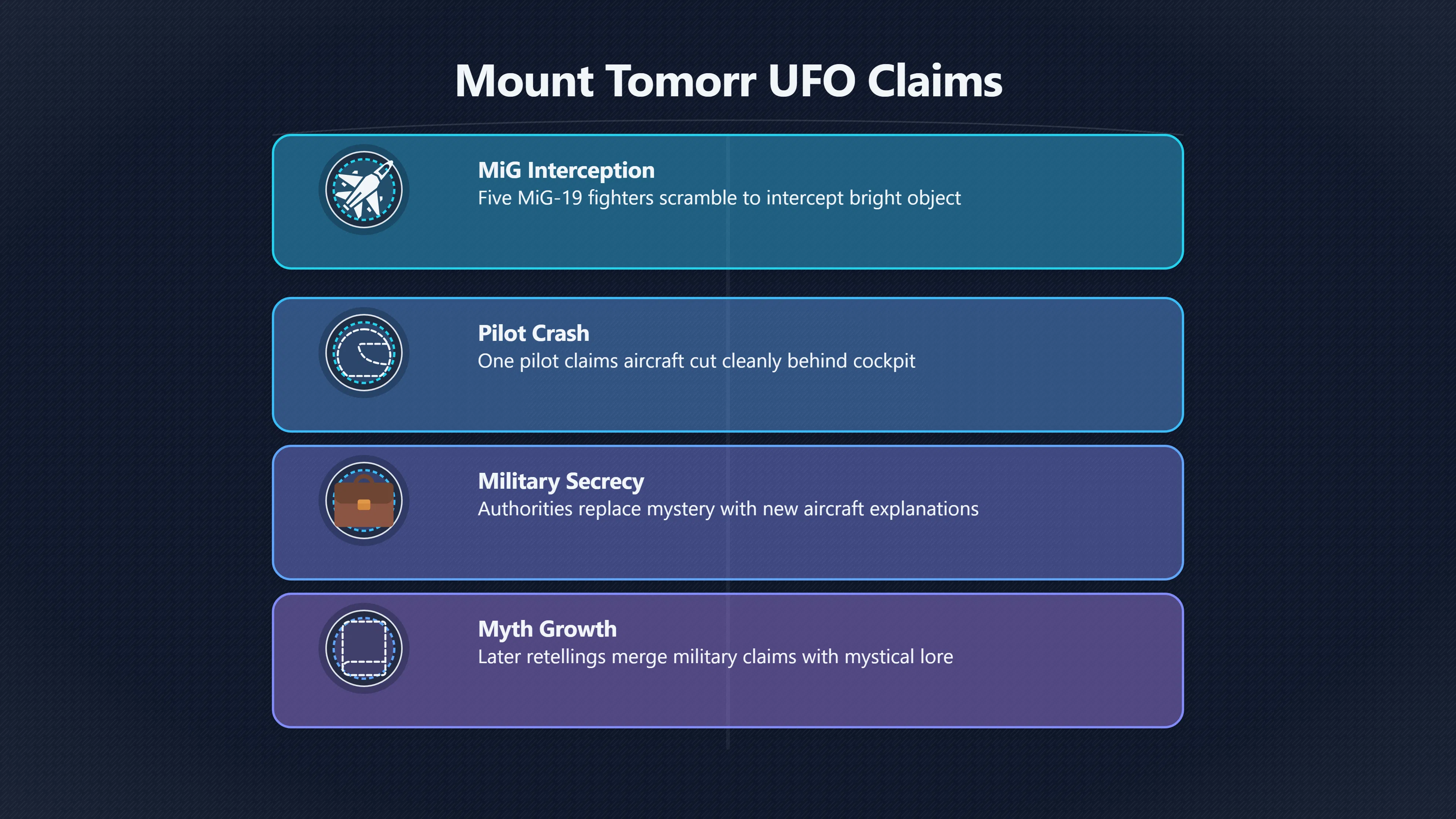
According to the most widely repeated version, five MiG-19 fighters were scrambled after reports of an unidentified luminous object. Witnesses later claimed the object emitted intense light, disrupted communications and interfered with cockpit instruments. One account states that a pilot named Veiz Lamë pursued the object after being ordered to open fire. The story then becomes more dramatic and less verifiable: some retellings claim his aircraft crashed after appearing to be “cleanly cut” behind the cockpit, while others say he survived. The details vary substantially between versions. [Wikipedia]WikipediaUFO sightings in AlbaniaUFO sightings in Albania
Several features make the Tomorr story historically interesting even if its extraordinary elements remain unproven:
- Military framing: the object was reportedly treated as a national-security issue rather than a public mystery.
- Cold War geography: southern Albania faced Greece, a NATO member, making foreign aircraft a constant concern.
- Restricted information flow: no contemporary public reporting from the communist era has surfaced to corroborate the event.
- Myth accumulation: later retellings merged military claims with Tomorr’s longstanding mystical reputation.
The strongest caution for historians is that no publicly available flight logs, radar records, accident investigations or authenticated Sigurimi documents have been released confirming the details. The case survives primarily through retrospective reporting and secondary narratives decades after the alleged event. [Wikipedia]WikipediaOpen source on wikipedia.org.
Kuçova Air Base and the militarisation of unexplained sightings
Kuçova Air Base played a central role in Albania’s Cold War air defence network. Built in the 1950s and heavily militarised during the communist period, the base operated Soviet and later Chinese-supplied fighter aircraft, including MiG variants associated with the Tomorr narratives. The city itself became a restricted military zone known during the communist era as “Stalin City”. [Wikipedia]WikipediaKuçovë AerodromeKuçovë Aerodrome
That military environment matters because many Albanian UFO accounts from the communist era originated near sensitive aviation infrastructure. Several recurring patterns appear in later testimonies:
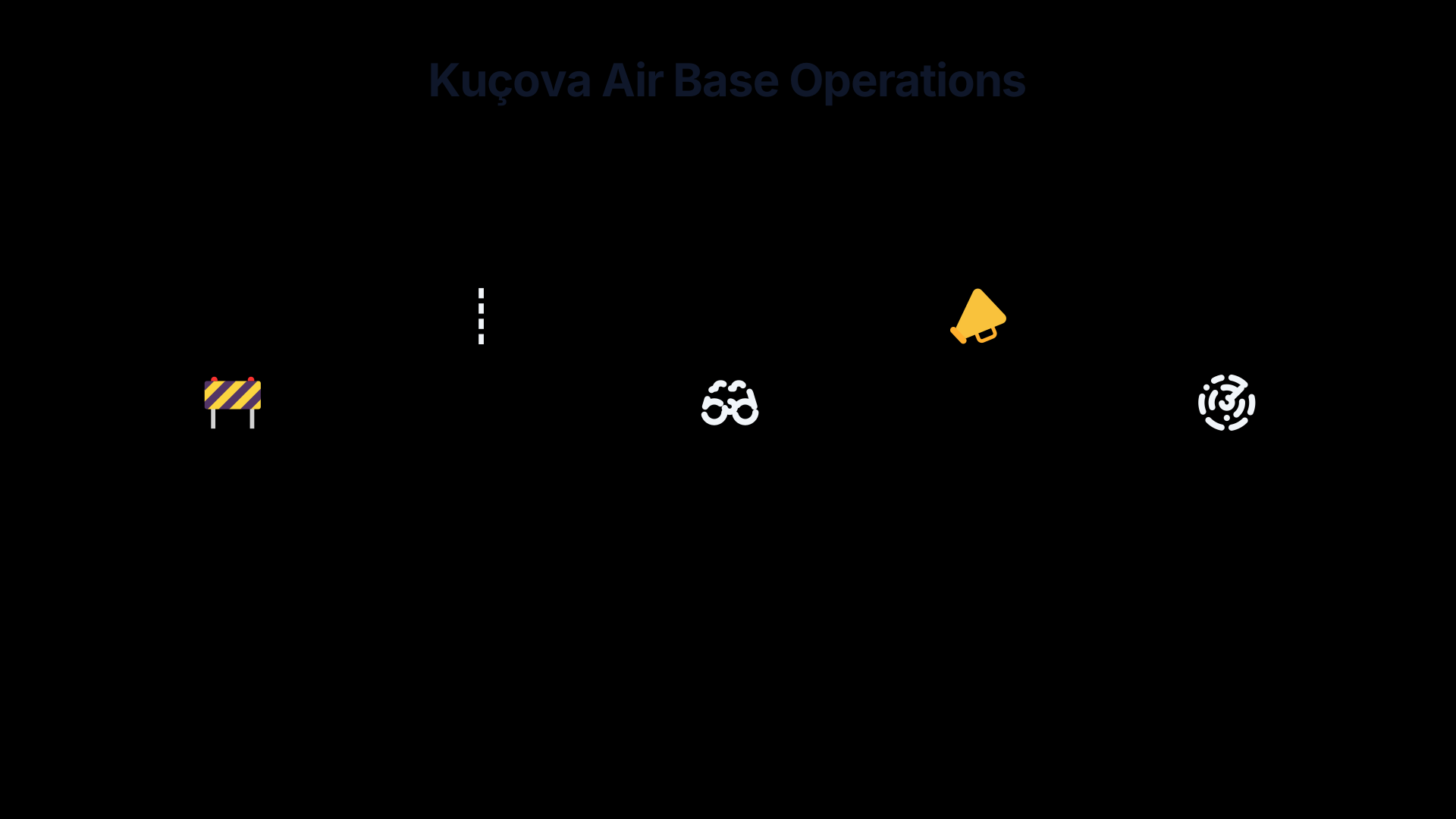
- Bright objects interpreted initially as NATO reconnaissance craft.
- Sudden military mobilisation around unexplained lights.
- Pilots or officers discouraged from discussing incidents publicly.
- Civilian witnesses receiving official explanations framed around military technology.
One reported case from January 1963 involved residents in the Kurvelesh region seeing a bright object in the sky. Authorities reportedly reassured locals that it was merely a new Albanian military aircraft rather than an unidentified object. Whether or not the explanation was sincere, the response reflected the regime’s preference for controlled narratives over open investigation. [Wikipedia]WikipediaMuseum of Secret SurveillanceMuseum of Secret Surveillance
The Kuçova connection also illustrates how later UFO folklore can grow from genuine Cold War secrecy. Albania operated underground aircraft shelters, dispersed military facilities and restricted radar infrastructure. Civilians often lacked information about what they were observing, while official secrecy encouraged speculation. Some later UFO claims may therefore reflect encounters with classified or poorly understood military activity rather than genuinely anomalous phenomena. [Wikipedia]WikipediaOpen source on wikipedia.org.
What do the Sigurimi archive claims actually show?
Claims about Sigurimi involvement are among the most controversial parts of Albania’s UFO history. Albanian press reports and memoir-style narratives have repeatedly asserted that state security officials documented unexplained aerial phenomena and forwarded reports to senior communist figures including Hysni Kapo and Gogo Nushi. [Wikipedia]WikipediaOpen source on wikipedia.org.
The problem is evidential rather than conceptual. It would not be surprising if the Sigurimi collected reports about strange aerial events. The organisation monitored nearly every aspect of Albanian society and treated border security as a central mission. Any unexplained object near military infrastructure would likely have generated internal reporting. [Wikipedia]WikipediaOpen source on wikipedia.org.
However, there is an important distinction between:
- evidence that the Sigurimi investigated unidentified aerial incidents; and
- evidence that the regime believed it had encountered non-human craft.
Publicly accessible material supports the first possibility more than the second. No authenticated archive release has demonstrated that communist authorities concluded the phenomena were extraterrestrial. Most references instead suggest intelligence concern about foreign aircraft, espionage or military penetration.
The archival landscape further complicates the issue:
Archival questionCurrent state of evidenceDid the Sigurimi keep extensive surveillance files?Yes, extensively documented. [Wikipedia]WikipediaOpen source on wikipedia.org. Were all files preserved after communism?No; historians and political investigators believe many were destroyed or remain inaccessible. [Wikipedia]WikipediaOpen source on wikipedia.org. Have verified UFO-specific files been publicly released?No confirmed comprehensive release is publicly available.Do later Albanian reports claim such files existed?Yes, repeatedly, especially around Mount Tomorr incidents. [Wikipedia]WikipediaOpen source on wikipedia.org.
This distinction is crucial because many modern articles collapse rumour, testimony and archival evidence into a single narrative. The existence of secrecy does not itself validate extraordinary claims.
Why Mount Tomorr became a magnet for UFO folklore
Mount Tomorr’s role in Albanian UFO culture cannot be separated from its symbolic status. The mountain has long been associated with religious pilgrimage, sacred geography and supernatural folklore. During the communist period, religion was suppressed and parts of the mountain region were militarised. That combination created a powerful setting for later mystery narratives. [Wikipedia]WikipediaOpen source on wikipedia.org.
Several later stories linked luminous aerial phenomena to the Tomorr region, including reports from the Pirogoshi Canyon area in the late 1960s. One recollection described two bright circular objects appearing over the canyon before rapidly disappearing. Witnesses at the time reportedly speculated about missiles or foreign military activity rather than extraterrestrials. [Wikipedia]WikipediaOpen source on wikipedia.org.
This pattern is historically revealing. Albanian UFO narratives during the communist period rarely began with the language of alien visitation. They were usually filtered first through Cold War anxieties:
- NATO reconnaissance fears.
- Secret weapons speculation.
- Military testing assumptions.
- Rumours about border incursions.
Only later, especially after the 1990s opening of Albanian media culture, were these stories reframed more explicitly as UFO encounters.
How reliable are the communist-era Albanian UFO reports?
The reliability of Albania’s Cold War UFO archive is mixed and often weak by modern investigative standards. The strongest historical claim is not that extraordinary craft were proven, but that unexplained aerial incidents were taken seriously inside a paranoid security state.
Several factors limit confidence in the stories:
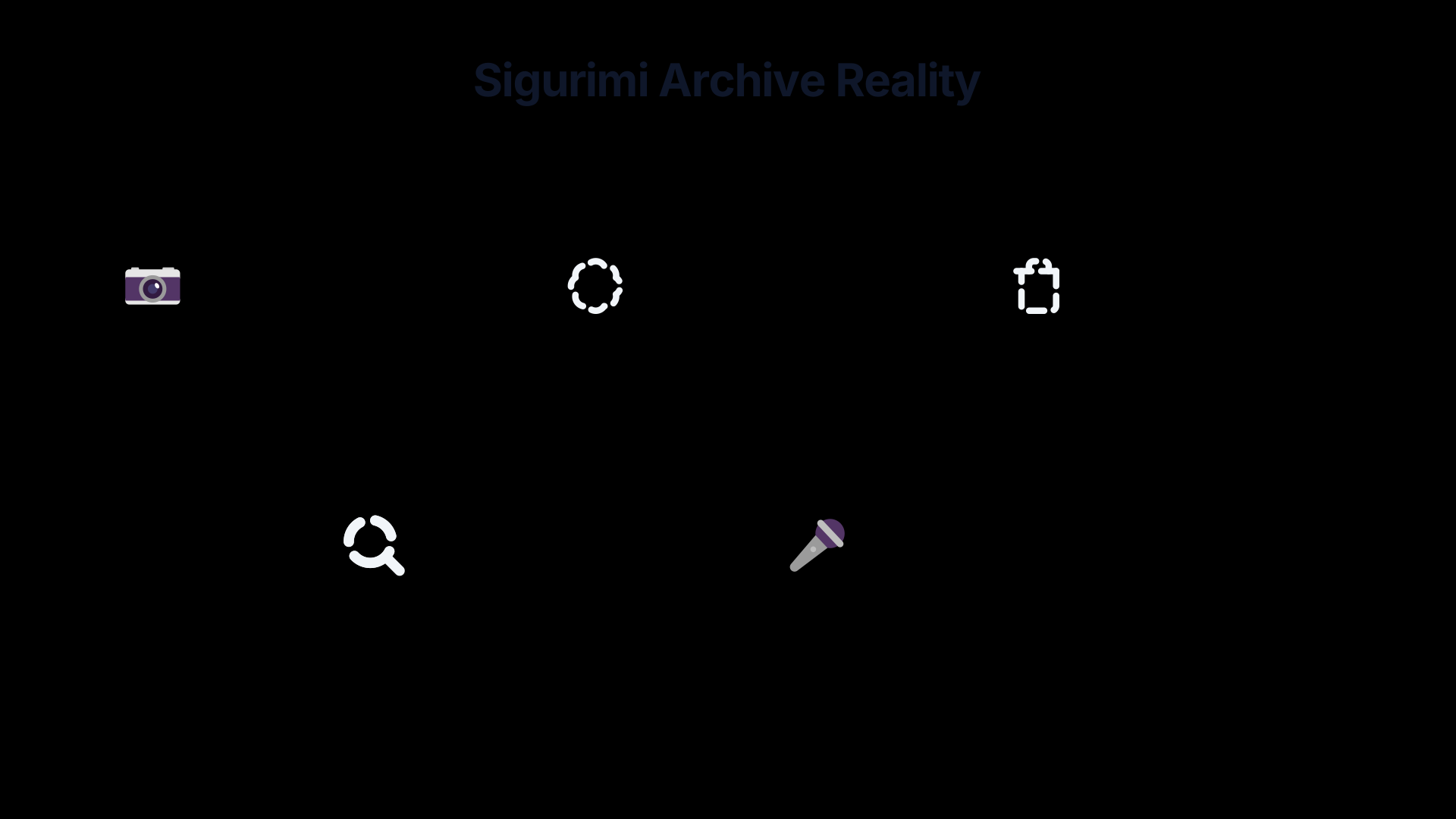
Lack of contemporary public records
Very few communist-era reports were documented openly at the time. Most narratives emerged decades later through interviews, television segments or online summaries. That creates major problems with memory accuracy and source tracing.
Circular sourcing
Many Albanian UFO stories repeat through multiple websites and articles that ultimately rely on the same small pool of earlier claims. Over time, speculative details can harden into “facts” simply through repetition.
Missing technical evidence
No publicly released radar data, cockpit recordings, authenticated military photographs or complete accident reports have surfaced for the major Cold War-era cases.
Genuine historical secrecy
At the same time, the absence of evidence cannot simply be treated as disproof. Communist Albania genuinely maintained one of Europe’s most secretive internal-security systems, and significant archival destruction likely occurred after regime collapse. [Wikipedia]WikipediaOpen source on wikipedia.org.
The most balanced interpretation is therefore cautious: Albania probably experienced a mixture of ordinary aerial misidentifications, military secrecy, Cold War anxiety and a smaller number of genuinely unexplained observations that were never properly documented.
What these cases reveal about communist Albania
The enduring value of Albania’s communist-era UFO stories lies less in the question of extraterrestrial visitation than in what they reveal about the state itself. The reports expose how an isolated authoritarian system processed ambiguity.
Three themes stand out.
First, unexplained aerial events were automatically securitised. In a country obsessed with invasion and espionage, strange lights in the sky became intelligence matters rather than public curiosities.
Second, secrecy amplified mythmaking. Because citizens rarely received transparent explanations, rumours accumulated around military zones and restricted regions such as Mount Tomorr and Kuçova.
Third, the collapse of communism transformed forgotten military rumours into media-era UFO narratives. Once censorship ended, stories that had circulated privately for decades entered newspapers, television discussions and internet forums, often gaining dramatic embellishments along the way.
For that reason, Albania’s communist-era UFO archive is historically significant even where the evidence remains inconclusive. It documents the collision between Cold War surveillance culture, inaccessible archives and the enduring human tendency to interpret unexplained events through the political fears of the moment.
Amazon book picks
Further Reading
Books and field guides related to How Did Albania's Cold War Secrecy Shape UFO Sightings?. Use these as the next step if you want deeper reading beyond the article.
The Hynek UFO Report
Provides context for how official investigations handled unexplained aerial reports.
Passport to Magonia: from Folklore to Flying Saucers
Connects UFO narratives with folklore, secrecy and cultural interpretation relevant to Cold War Albania.
UFOs
Focuses on military and government reporting environments similar to the secrecy themes discussed.
UFOs and Government
Examines government treatment of UFO reports across the Cold War period.
Endnotes
-
Source: Wikipedia
Title: UFO sightings in Albania
Link: https://en.wikipedia.org/wiki/UFO_sightings_in_Albania -
Source: Wikipedia
Link: https://en.wikipedia.org/wiki/Sigurimi -
Source: Wikipedia
Title: Kuçovë Aerodrome
Link: https://en.wikipedia.org/wiki/Ku%C3%A7ov%C3%AB_Aerodrome -
Source: Wikipedia
Title: Museum of Secret Surveillance
Link: https://en.wikipedia.org/wiki/Museum_of_Secret_Surveillance -
Source: Wikipedia
Link: https://en.wikipedia.org/wiki/Tomorr -
Source: Wikipedia
Link: https://en.wikipedia.org/wiki/Ku%C3%A7ov%C3%AB
Additional References
-
Source: youtube.com
Title: Did a former Soviet Union citizen tour a UFO and leave proof? | Reality Check
Link: https://www.youtube.com/watch?v=-LSUrmfl46ESource snippet
The Emilcin Incident: A Polish Encounter of the Fourth Kind | Culture.pl...
-
Source: youtube.com
Title: The Emilcin Incident: A Polish Encounter of the Fourth Kind | Culture.pl
Link: https://www.youtube.com/watch?v=0h5oU44eN2kSource snippet
UFOs in the Soviet Union: A Look Back at the Voronezh Incident...
-
Source: youtube.com
Title: UFOs in the Soviet Union: A Look Back at the Voronezh Incident
Link: https://www.youtube.com/watch?v=fX8V2dZ8vV8Source snippet
Cold War UFOs: Examining State Secrets and Paranormal Claims...
-
Source: youtube.com
Title: Cold War UFOs: Examining State Secrets and Paranormal Claims
Link: https://www.youtube.com/watch?v=52lZ9-6-XyMSource snippet
The History of UAP Research and Government Secrecy...
-
Source: youtube.com
Title: The History of UAP Research and Government Secrecy
Link: https://www.youtube.com/watch?v=gY359vN4k5I
Topic Tree